
Win Up to CLP 1.8 Billion for Mining Circularity: CORFO Chile Copper Circularity Challenge 2025 Guide
Chile produces roughly one third of the world’s copper.
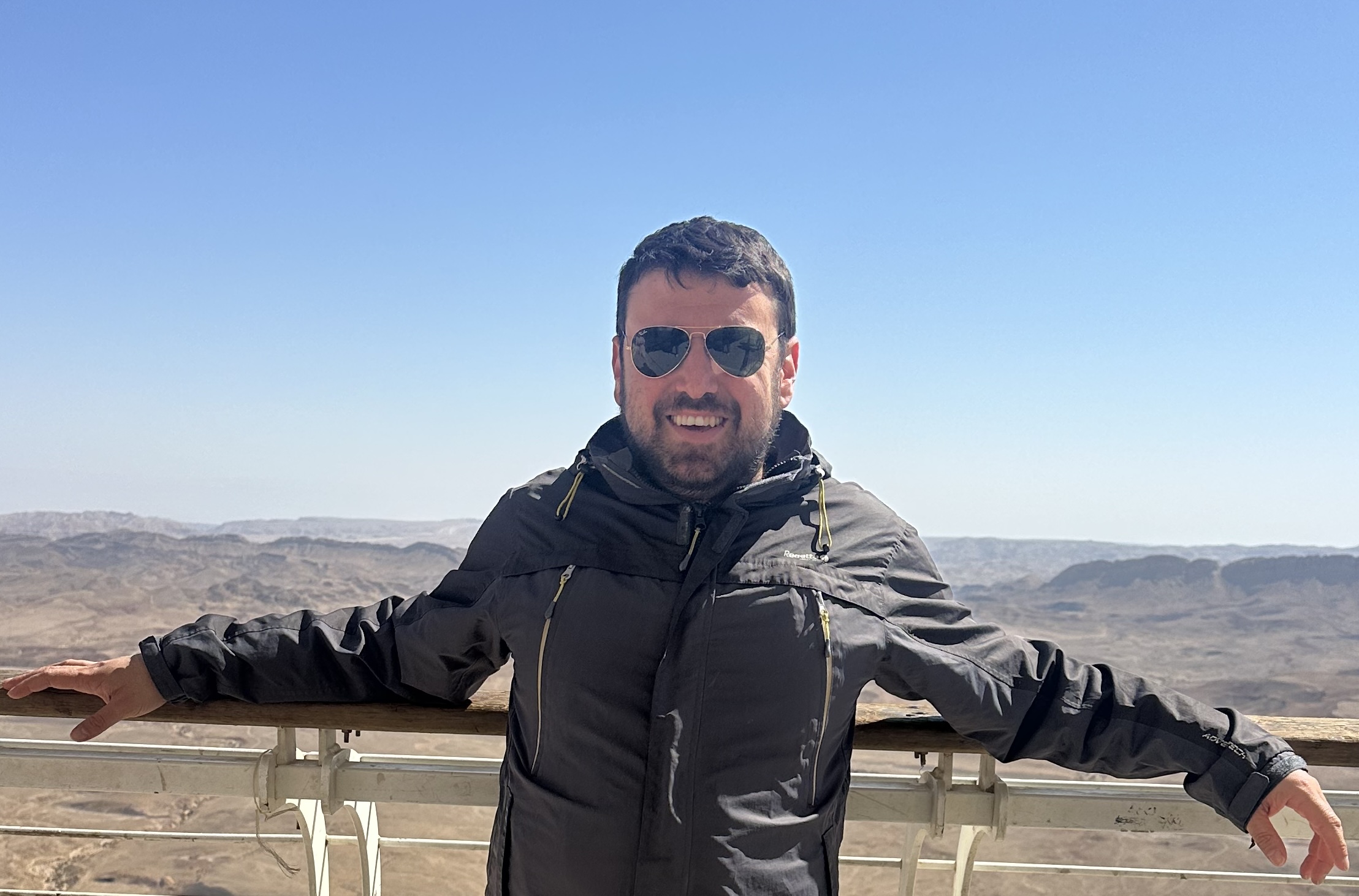
Chile produces roughly one third of the world’s copper. That gives the country an embarrassing surplus of both influence and tailings: mountains of processed rock sitting in storage, process water leaving sites, and by-products that could be raw material for new industries if someone figured out how to extract value responsibly. CORFO’s Chile Copper Circularity Challenge is not a research stipend for lab tinkering — it is serious money to move industrial-scale pilots into active mines and mining regions. If your consortium can prove a circular approach works in the harsh reality of the Atacama, CORFO will back you with up to CLP 1,800,000,000 (about USD 2 million) per consortium.
This opportunity is rare because the funder wants pilots that operate at industrial scale, embedded inside mining operations, with measurable environmental gains and direct economic pathways. You will need operational partners, local buy-in, and hard numbers showing how your approach changes waste generation, water use, or critical-mineral recovery. If you can bring that, the prize is generous and strategically placed: it can turn a pilot into a commercial offering and create long-term jobs in mining regions.
Below I walk you through what this fund covers, who should apply, what reviewers will be looking for, how to assemble a winning application, common traps and how to avoid them, and step-by-step application instructions so you can move from idea to submission without losing sleep at the last minute.
At a Glance
| Detail | Information |
|---|---|
| Award per Consortium | Up to CLP 1,800,000,000 (≈ USD 2 million) |
| Program Type | Matching grant for industrial-scale circular economy pilots |
| Deadline | August 11, 2025 |
| Eligible Applicants | Consortia including mining companies, suppliers, Chilean SMEs, research centers |
| Geographic Focus | Chilean mining regions (Antofagasta, Atacama, other copper-producing areas) |
| Key Focus Areas | Tailings valorization, water circularity, critical mineral recovery, community innovation |
| Co-financing | Matching funds typically required (approx. 50% cost-share, cash or in-kind) |
| Duration | Typical projects run 24–36 months from pilot to scale |
| Administering Agency | CORFO (Chile Economic Development Agency) |
What This Opportunity Offers
Think of this grant as both capital and market validation. CORFO is giving serious money to consortia that can demonstrate circular systems in real mining operations — not bench tests. The funding supports hardware (recovery and treatment equipment), process engineering, environmental mitigation during reprocessing, community development, and digital monitoring systems. But the cash is only one piece; successful awardees also receive technical mentorship from mining and process experts, access to CORFO facilities for scale testing, and matchmaking with investors who want sustainable mining solutions.
There are explicit subcomponents that steer applicants toward holistic pilots. One major bucket supports recovering minerals from tailings: equipment for reprocessing, analytical capability to characterize residual metals, and product development for recovered concentrates or secondary materials. Another chunk is reserved for water circularity: membrane systems, closed-loop process designs, and desalination where applicable. A third portion is intended to seed community innovation hubs — shared fabrication labs, training programs, and support for SMEs in mining regions to create downstream products from recovered materials. Finally, funds are set aside for digital monitoring — IoT, process automation, and transparent reporting systems that prove environmental claims to regulators and investors.
Beyond direct costs, CORFO expects projects to demonstrate commercial pathways. They do not want pilots that stop at demonstration; they want pilots that generate revenue potential and a credible plan for scale. If your pilot shows decent economics and community buy-in, it can become a national reference and an exportable service for mining elsewhere.
Who Should Apply
This program is built for consortia that combine industrial access, technical capability, and local legitimacy. If you are a single technology provider with promising lab data but no mine partner, this is not the right moment. If you are a mining company seeking to reduce risk and costs, a Chilean SME ready to scale circular manufacturing, or an engineering firm with process experience, read on.
A strong lead is a Chilean entity — often a mining company, established supplier, or research institution — that can secure a pilot site and provide matching contributions (cash or equipment). Your consortium should include at least one mine operator willing to host the pilot at scale; an engineering or technology partner with prior deployment experience; Chilean SMEs ready to operate or commercialize recovered materials; and community representatives or local government partners to ensure social license. Where indigenous communities are affected, meaningful early engagement and consent processes are mandatory.
Examples of fit: a consortium where a mid-sized mine commits tailings access, a Chilean metallurgical SME provides pilot processing lines, an engineering firm adapts its flotation or leaching process for tailings chemistry, and a local cooperative will produce value-added products from by-products. Another fit: an international membrane provider partnered with a Chilean desalination operator, a mining company committing brine streams for closed-loop trials, and a local university documenting performance and lifecycle benefits.
Insider Tips for a Winning Application
Build a consortium that reads like a complete story. The strongest proposals show not just competence but complementary roles: host mine, operator, technology supplier, Chilean SMEs to localize benefits, and social partners to manage impacts. Include a clear governance and decision-making map so reviewers see who does what when the pilot hits a snag.
Be forensic about the economics. CORFO funds pilots that can show economic trajectories. Present detailed capital and operating cost lines, revenue scenarios for recovered materials, and sensitivity analyses for price swings and recovery variability. Show payback periods and, crucially, stress tests: what happens if recovery is 10–20% worse than expected?
Water math matters. In the Atacama every liter counts. Even if your focus is mineral recovery, explicitly calculate water consumption, reuse rates, and net freshwater avoided. If your process requires desalination, show power and brine management plans. In short: prove your water story is credible.
Plan for the desert. Logistics, energy reliability, salinity, and abrasive aerosols change process performance. Include engineering contingencies: spare parts plans, dust-tolerant filtration, and mobile maintenance teams. Explain how you will keep downtime low during the pilot.
Make the social contract concrete. Name the municipalities, unions, or indigenous communities you’ve consulted. Attach letters or memoranda of understanding that show benefit-sharing commitments. Vague promises about “local hiring” won’t impress reviewers; specific training programs, procurement targets for local SMEs, and revenue-sharing mechanisms will.
Treat data transparency as a product. CORFO expects public lessons and technical reporting. Create a data plan that includes anonymized process metrics, environmental monitoring, and periodic public reporting. Open data increases credibility and helps attract follow-on investment.
Address IP and knowledge sharing upfront. You can protect commercial IP while still committing to publish technical lessons. Include licensing frameworks in consortium agreements that allow technology providers to monetize while ensuring national capacity-building.
Show a scale pathway. Pilot designs should include clear next steps to commercialize: additional investment rounds, industrial partners for replication, regulatory approvals needed, and market channels for recovered products.
These tips are practical, not rhetorical. Spend time turning each into concrete deliverables in your application.
Application Timeline (Realistic and Practical)
Start early. For a complex industrial pilot you need momentum and documents that can take weeks to produce.
April 2025 — Convene your core partners, sign consortium letters of intent, and submit any required expression of interest. Use this phase to capture site agreements and preliminary community contacts.
May 2025 — Baseline and diagnostics. Conduct measurements at the pilot site: tailings characterization, water balances, and emissions inventory. These numbers will anchor your targets and claims.
June–July 2025 — Engineering and approvals. Finalize pilot design, safety and environmental impact plans, community engagement strategies, and financial models. Secure letters of support and any municipal permits you can reasonably obtain before submission.
Early August 2025 — Final review and submission. Submit at least 72 hours before the deadline to handle upload issues and last-minute clarifications.
August 11, 2025 — Application deadline (final proposals due).
Sept–Oct 2025 — CORFO review period. Expect questions and possible site visits.
Nov 2025 — Finalists present in Antofagasta. Prepare a crisp pitch and demo materials.
Dec 2025–Jan 2026 — Grant agreements and kick-off planning.
Required Materials (What You Must Prepare)
Your application should read like a compact operational plan with evidence. Prepare these documents early and treat them as living drafts:
- Consortium agreement or letters of commitment: Clear roles, cost-share breakdowns, governance, IP arrangements, benefit-sharing with communities.
- Technical proposal and engineering designs: Process flow diagrams, equipment lists, recovery methods, expected throughput, and operational safety measures.
- Baseline environmental and water diagnostics: Current tailings composition, water usage and quality data, emissions baseline.
- Financial model and budget: Capital and O&M costs, co-financing commitments, revenue projections for recovered materials, sensitivity analyses.
- Community engagement plan and letters of support: Documents showing consultations, agreements with municipal and indigenous stakeholders, training and hiring commitments.
- Monitoring and data management plan: Sensor and reporting architecture, key performance indicators, and public reporting cadences.
- Risk and mitigation matrix: Operational, environmental, social, and market risks with contingency plans.
- CVs and institutional profiles: Demonstrate technical capability and previous deployment experience.
- Permits or preliminary site hosting agreements: Any signed commitments from mine operators to host the pilot.
Each document should be crisp, focused, and evidence-based. Attach photos, maps, or lab reports to substantiate claims.
What Makes an Application Stand Out
Reviewers want three things: credible impact, feasible execution, and economic realism. Applications that rise to the top combine those elements with strong local benefits.
Credible impact means measurable environmental gains: quantified reductions in tailings volume, freshwater saved, or quantities of critical minerals recovered. You should present baseline measurements and concrete KPIs for the pilot.
Feasible execution means you have access to the site, appropriate engineering and maintenance capacity, and realistic timelines. Show operational readiness: spare parts, trained staff, logistics plans, and safety protocols.
Economic realism is about honest numbers. Overly optimistic recovery rates or cost assumptions will be penalized. Provide independent estimates where possible and include sensitivity tables. The reviewers favor pilots that are likely to be commercially viable with reasonable scaling capital.
Finally, proposals that go further — by embedding local SMEs in value chains, creating training programs, or presenting repeatable commercial models — demonstrate multiplier effects. These projects do more than reduce waste; they seed new industries in mining regions.
Common Mistakes to Avoid (and How to Fix Them)
Mistake 1: Vague consortium roles. Fix it by supplying a one-page governance matrix that shows each partner’s responsibilities, decision rights, and financial contributions.
Mistake 2: Weak baseline data. Fix it by prioritizing on-site measurements early and including independent lab analyses for tailings and water quality.
Mistake 3: Over-optimistic economics. Fix it by running at least three sensitivity scenarios, including a conservative case where recovery is 20% below your target.
Mistake 4: Late community engagement. Fix it by documenting early outreach and including MOUs or meeting minutes. That demonstrates social license.
Mistake 5: Ignoring logistics in desert conditions. Fix it by adding maintenance and spare parts logistics to your operational budget, plus a contingency schedule for downtime.
Mistake 6: Treating knowledge sharing as an afterthought. Fix it by embedding a communications plan and regular public reporting milestones in the proposal.
Avoid these pitfalls and reviewers will see you as a credible team that can deliver.
Frequently Asked Questions
Can international companies participate? Yes. International firms can be technology providers, but the lead should be a Chilean entity and the consortium must show substantial Chilean participation — SMEs, operators, and research institutions.
Do we need a host mine already signed up? You need credible commitment — a letter of intent or preliminary agreement is required. Final contracts can be negotiated after award, but you must show the host will provide access and support.
What co-financing is expected? CORFO typically expects matching contributions, often around 50% of project cost, in cash or verifiable in-kind contributions from partners. Show clear cost-share sources.
Is proprietary IP a problem? No, as long as you commit to sharing technical lessons and data. IP can remain commercial, but technical outcomes, performance data, and environmental metrics should be made available per the program’s knowledge-sharing requirements.
How prescriptive is the 30% waste reduction target? Quantified environmental improvements are essential. Provide lifecycle comparisons based on your baseline. Explain metrics and measurement methods. Partial successes with strong learning outcomes can still be valuable if the proposal demonstrates a credible scaling pathway.
Will CORFO assist with regulatory permitting? CORFO offers guidance and mentorship but securing permits remains the applicant’s responsibility. Showing progress on permits strengthens your proposal.
Can we apply with multiple projects? Yes, but each project needs a distinct consortium, site, and full application.
How to Apply / Next Steps
Take action now if you want to be competitive.
- Convene partners in April — identify a Chilean lead, secure a mine-host letter, and recruit local SMEs and research partners.
- Commission baseline diagnostics immediately — tailings assays, water balances, and emissions data are foundational.
- Draft consortium agreements and a detailed budget that includes contingency and logistics for desert operations.
- Prepare community engagement documentation and any necessary indigenous consultation processes.
- Build a monitoring and data-sharing plan and be prepared to publish technical lessons in Spanish (and where appropriate, local indigenous languages).
Ready to apply? Visit the official CORFO program page for full guidelines, application forms, and contact details: https://www.corfo.cl/
If you want a quick checklist to share with your team, email me and I’ll send a one-page application readiness template you can use to track documents, due dates, and responsibilities. This is a high-effort, high-reward call — but for the consortia that can meet the operational bar, the funding and the credibility that come with CORFO support are substantial. Good luck — and plan wisely for the desert.